Swab Barcelona
Barcelona's emerging art fair. What you buy when the artist has no market yet, what it costs and what to ask before paying.
- When
- 8–11 October 2026
- Where
- Palau Victoria Eugènia, Montjuïc · Barcelona
- Official website
- swab.barcelona ↗
Galleries
Swab is Barcelona’s principal contemporary art fair and the one that poses the most uncomfortable question in the market: how do you price the work of somebody who has no market yet?
Every established work was once the work of somebody starting out, and sold for a fraction of what it is worth today. The trouble is that so did thousands of works that went nowhere.
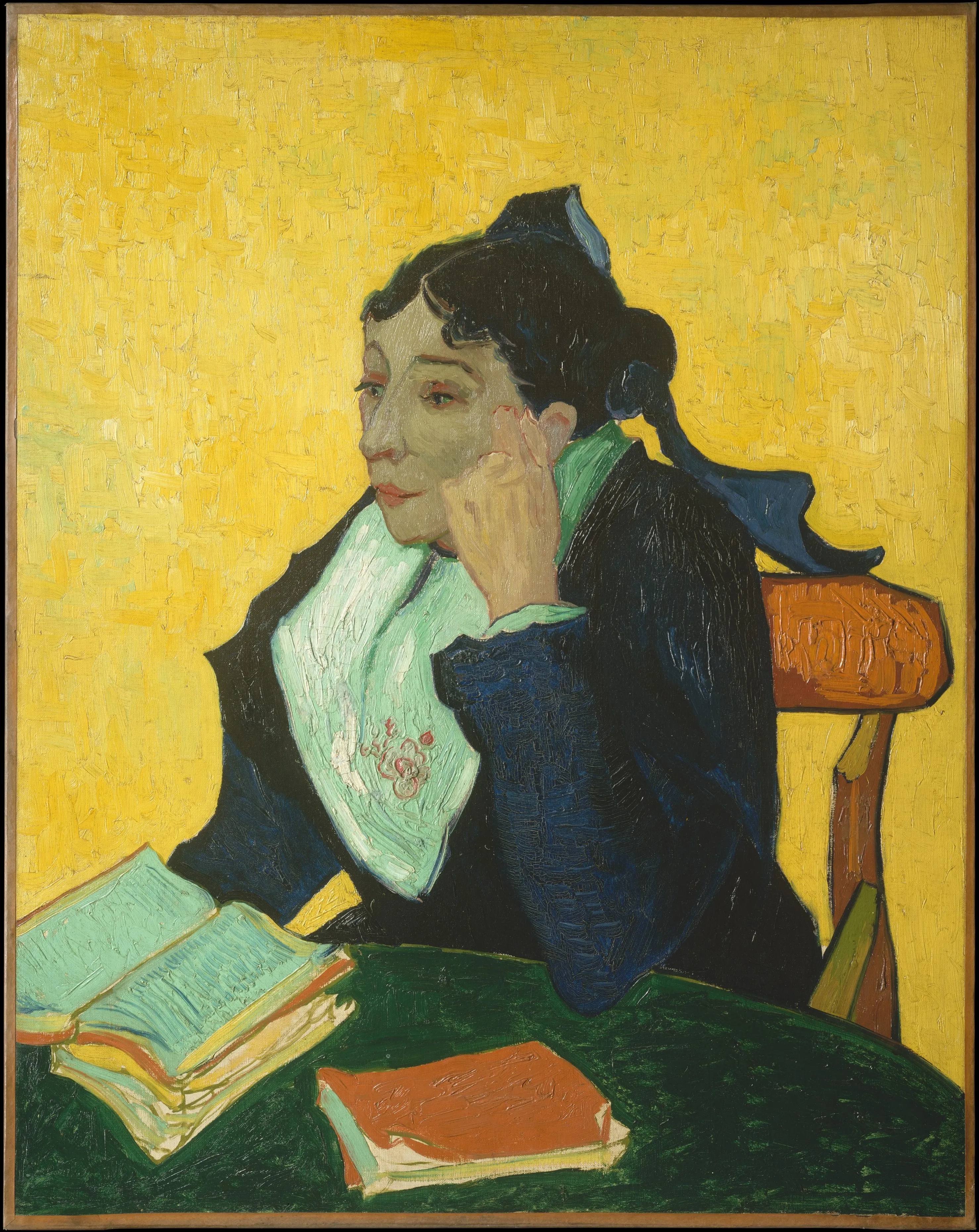
L'Arlésienne: Madame Joseph-Michel Ginoux (Marie Julien, 1848–1911)Vincent van Gogh1888–89 · The Met · objeto 436529 · CC0
What it is
An international contemporary art fair centred on young and emerging talent, with galleries from a dozen countries and a collectors’ programme. It is held at the Palau Victoria Eugènia, on Montjuïc.
It is by some distance the most important fair in Barcelona in its field, and its existence is the argument against the idea that the whole Spanish market runs through Madrid. It connects with the galleries in Barcelona working in contemporary art.
What to understand before going in
At a fair of old art, what is discussed is what the piece is: authorship, period, restorations. The object has a history that can be checked and the work consists of reading it.
At an emerging fair none of that exists. The work was made two years ago, the authorship is not in doubt and there is nothing to date. What is discussed is something else: how much is something worth that nobody has ever resold?
And the honest answer is that nobody knows. There is no market price because there is no market yet. What there is, is a price the gallery has set — and that is where everything turns.
Which is why you choose the gallery, not the artist
With no resale history, the only thing holding the price up is the judgement of whoever set it. The signals you can check in five minutes are the same ones that mark out a gallery with a programme:
- A list of represented artists that holds over time, not a roster that turns over completely every two years.
- Exhibitions with dates and texts of their own, not just a presence at fairs.
- Fairs with a selection committee — which is what Swab has.
- Work by its artists in public collections.
A gallery that stays with its artists for fifteen years has a real interest in today’s price being sustainable. One that rents out the wall does not.
What to ask at the stand
How long have you worked with this artist? The answer separates the gallery building a career from the one that is trying something out.
What did their work cost three years ago? If it has risen far and fast with no exhibitions or collections behind it, somebody is inflating.
Is there work by this artist in any public or institutional collection? It is the hardest endorsement to manufacture.
What happens if I want to sell it in ten years? There is no good answer —nobody can guarantee a secondary market— but the way it is answered tells you a lot. Anyone promising appreciation is selling something else.
What it costs, and how to take it
Emerging art is among the most accessible things at any fair: original work by living artists for figures below what an ordinary period cabinet costs. That makes it a reasonable way into collecting, with one condition.
It is not an investment. Most of these artists will have no secondary market in ten years, and that is not a defect of the fair: it is the arithmetic of the trade. You buy because you like the work and because the price is manageable. If it also appreciates, that is a bonus — not the plan.
Anyone looking for a purchase that holds value has other routes, and they are set out in the category guides.
Swab is the second date of an autumn of four fairs, and the one with the lowest price floor alongside Estampa. The full comparison is in four fairs in nine weeks.
Frequently asked
- What makes Swab different from ARCO?
- Where the artists are in their careers. ARCO works mainly with the established market, names that already have an auction record and a reference price. Swab is given over to emerging work: artists in their first years, with no resale history. That lowers the price a great deal and raises the uncertainty a great deal.
- Is emerging art a good investment?
- As an investment, no. Most of the artists seen at an emerging fair will have no secondary market in ten years, and that is not a failing of the fair: it is the arithmetic of the trade. You buy emerging work because you like it and because it costs what an expensive but manageable thing costs. If it also appreciates, that is a bonus, not the plan.
- How is a work valued when it has no market price?
- By the gallery, not by the artist. With no resale history, the only thing holding the price up is the judgement of whoever set it: what programme that gallery runs, how many artists it has stayed with over years, whether it shows at fairs with a selection committee. Buying emerging work is, above all, choosing a gallery.
- What paperwork should be asked for?
- An invoice with artist, title, year, technique and dimensions, and the certificate of authenticity signed by the artist or the gallery. On editioned work, the numbering. And one that gets forgotten: the gallery's contact details for ten years from now, because they are who you will go back to if you ever sell.